Your API broke.
I knew before users.

Real-time API monitoring, alerts, and load testing —
for teams that can't afford surprises.
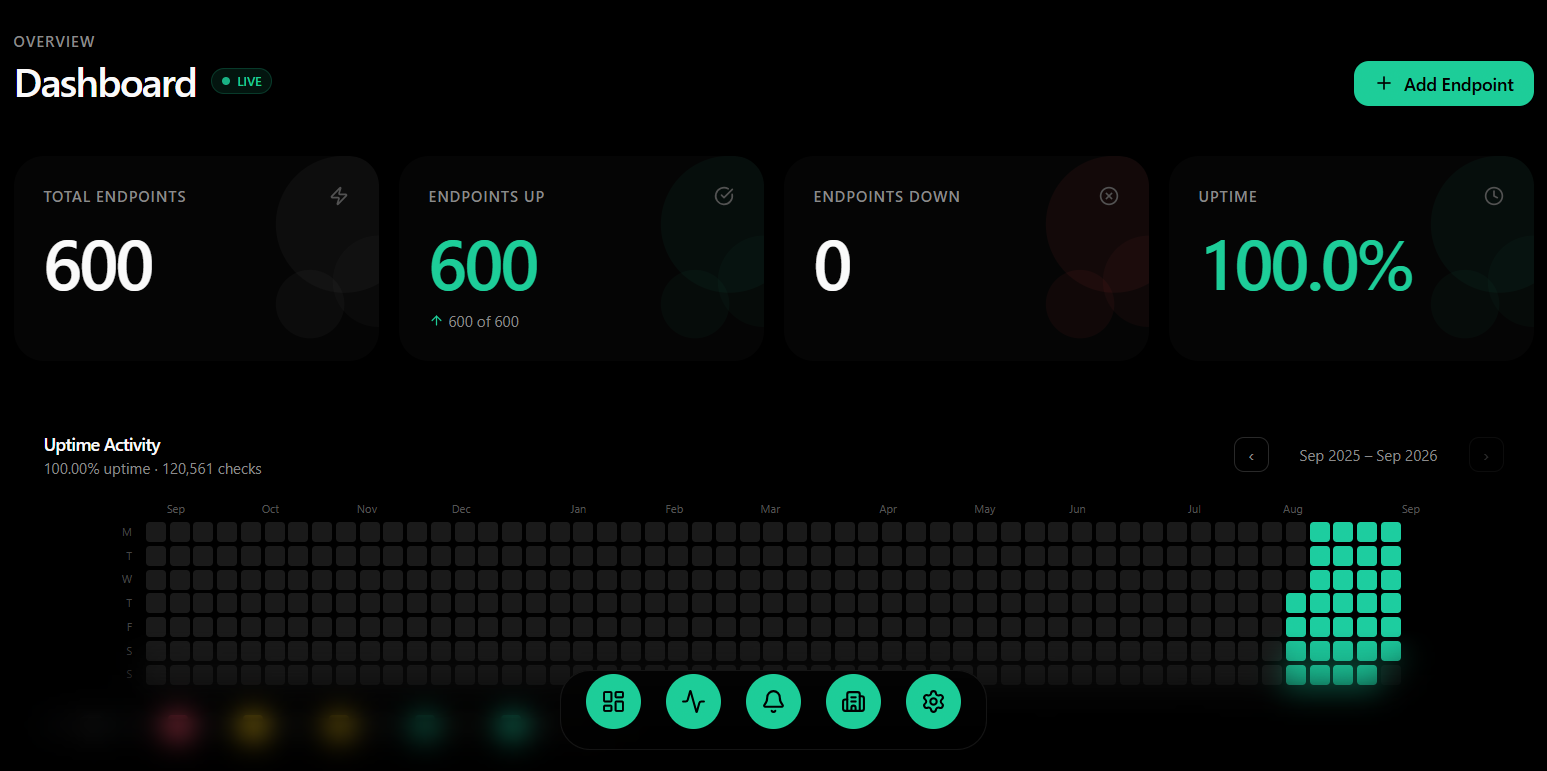
30scheck interval, every environment
<1 minfrom failed check to your inbox
12 moof uptime history, every check kept
app.apiwatch.io/dashboardlive
APIWatch dashboard: endpoints, uptime, and 12-month activity grid
12,000+endpoints monitored
99.97%uptime detected
<1 minavg alert time
5continents
The product

Every endpoint, every check, one screen.

Eight screens cover the whole loop: watch, drill in, measure, stress, compare, and share with the team.

Monitoring

One list, 600 endpoints deep

Search by name, URL, or environment. Filter to what is down. Every row carries its method, interval, and last check time.
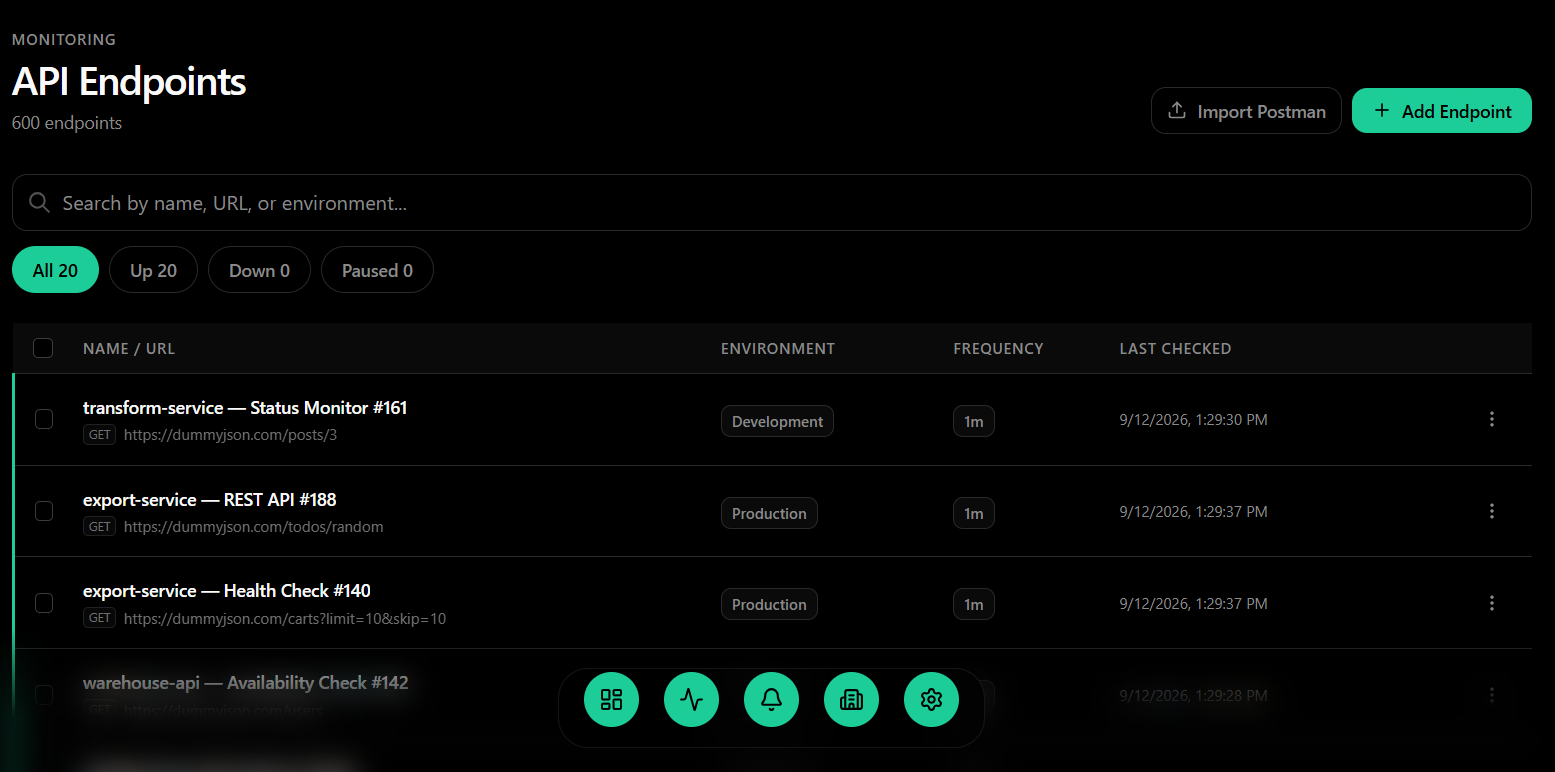
Check interval30s – 30min
FiltersAll · Up · Down · Paused
EnvironmentsProduction, staging, dev
app.apiwatch.io/endpointslive
API Endpoints list
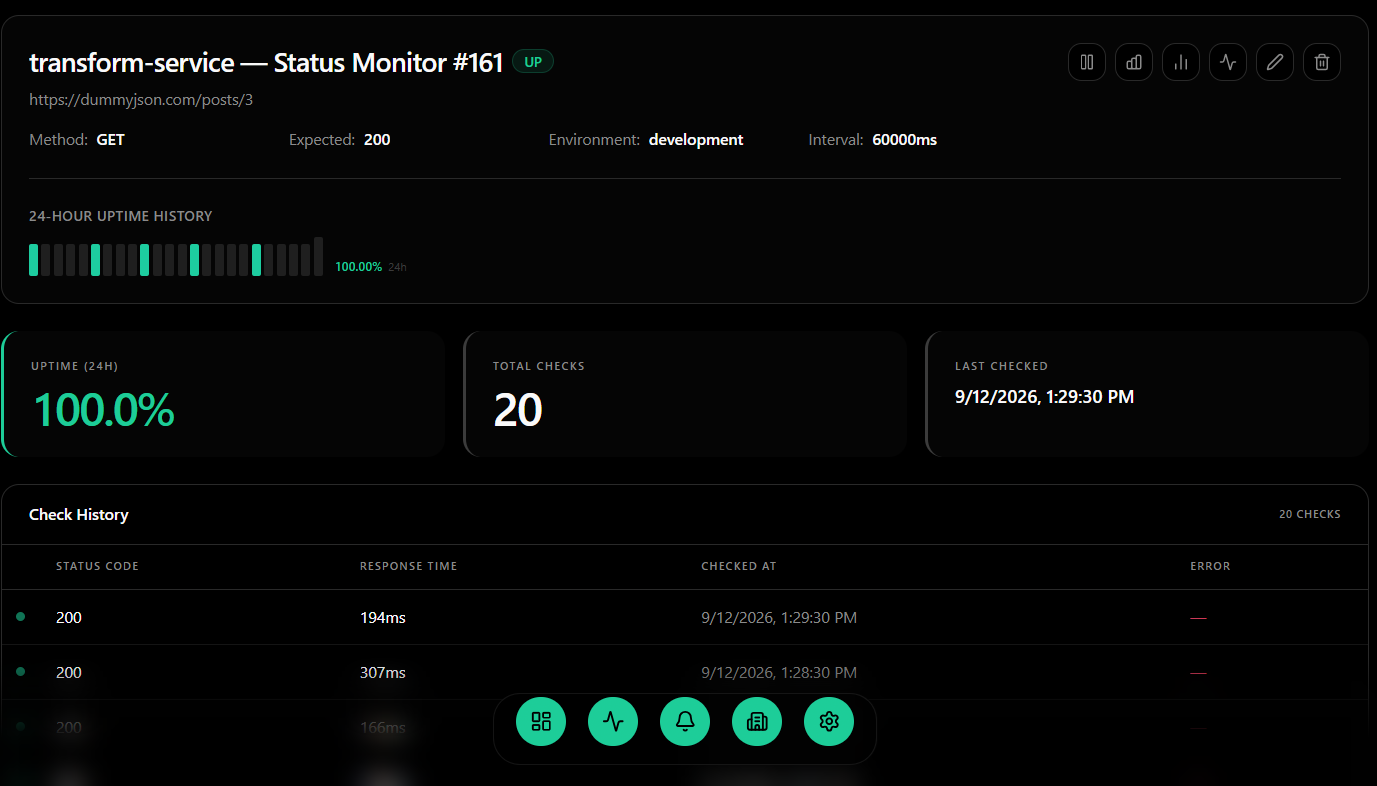
app.apiwatch.io/endpoints/161live
Endpoint detail view
Endpoint detail

Every check, timestamped

24-hour uptime history, total checks, and the full response log — status code, latency, and error for each one.

Every check stored24h · 30d · 12moPause, edit, delete
Performance

Percentiles, not averages

Average, p50, p95 and p99 side by side, against warning and critical thresholds you set per endpoint. The chart marks both lines so a breach is visible before it pages anyone.
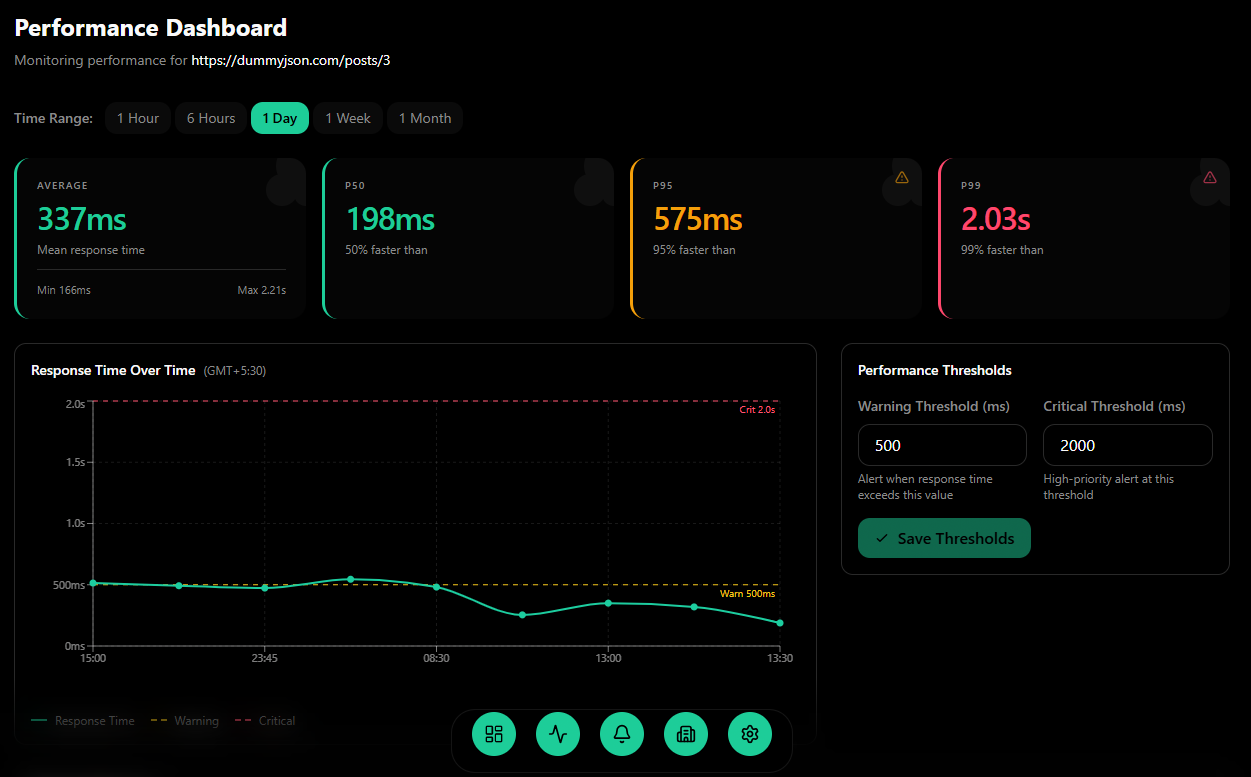
Time ranges1h · 6h · 1d · 1w · 1mo
ThresholdsWarning + critical
AlertingFires on breach
app.apiwatch.io/performancelive
Performance dashboard with p50/p95/p99 chart
app.apiwatch.io/load-testlive
Load and stress testing screen
Load & stress testing

Push it before traffic does

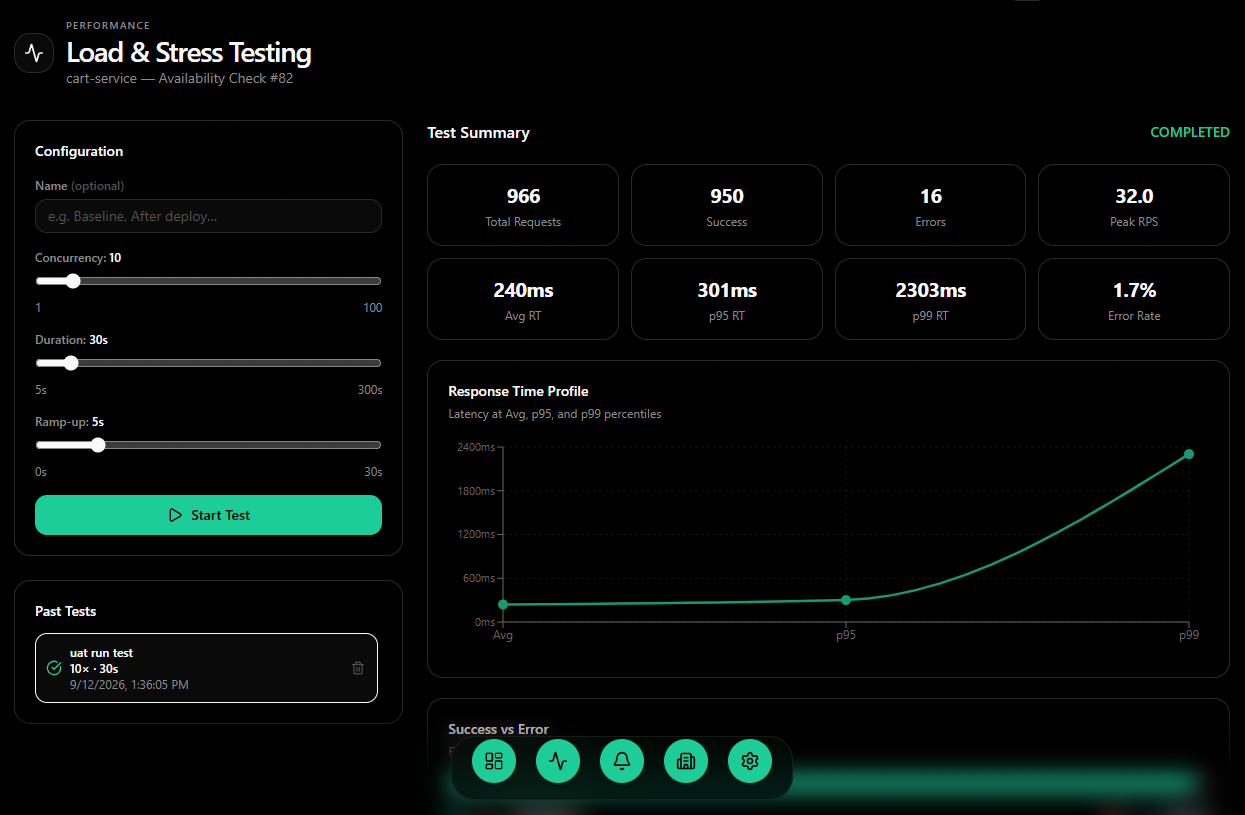
Set concurrency, duration, and ramp-up, then watch the response time profile bend at p99. Every past run is kept for comparison.

Concurrency1 – 100
Duration5s – 300s
ReportedRPS, error rate, p95, p99
Version benchmarking

Compare two versions on the same run

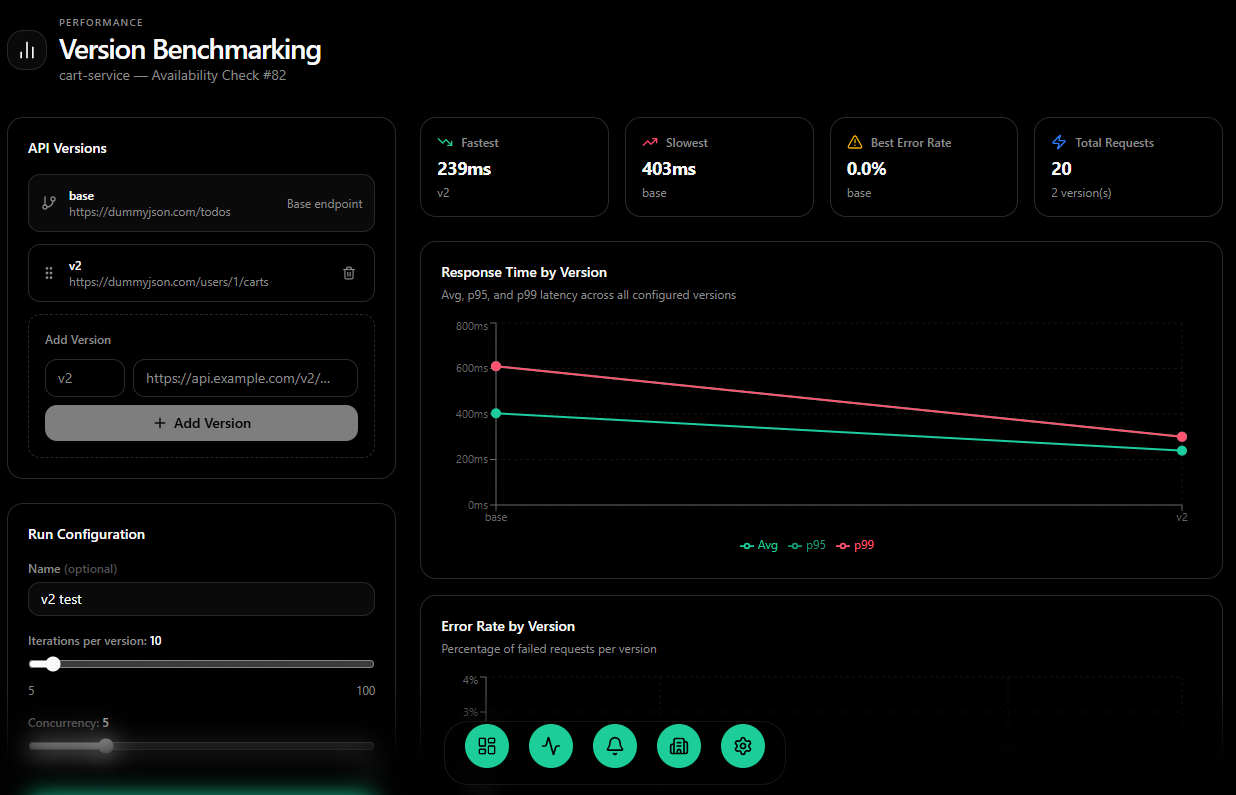
Point base and v2 at identical iterations and concurrency, then read fastest, slowest, and error rate per version.
Avg · p95 · p995 – 100 iterationsError rate by version
app.apiwatch.io/benchmarklive
Version benchmarking screen
app.apiwatch.io/organizationslive
Organizations screen with workspace cards
Teams

A workspace per product or client

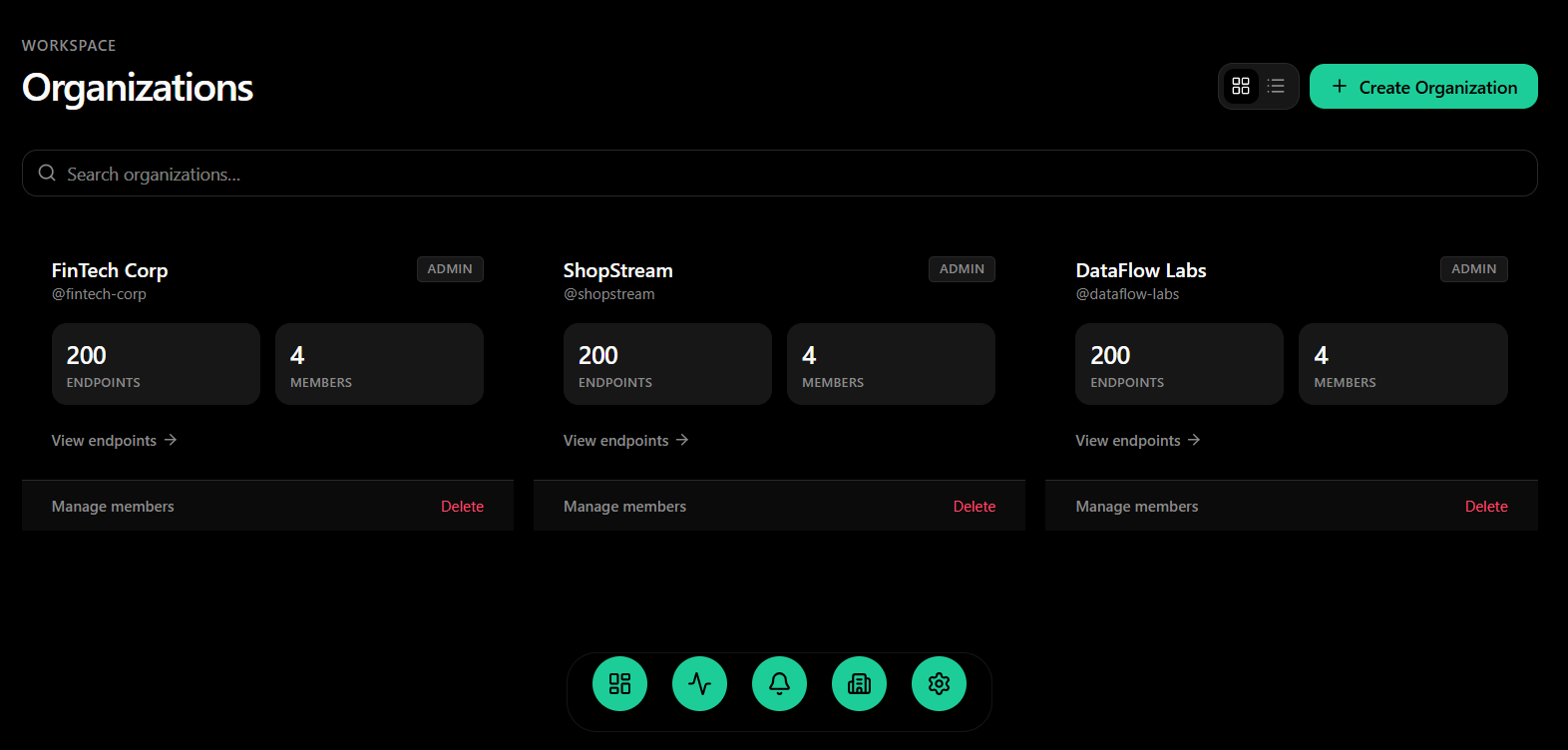
Each organization keeps its own endpoints, members, and roles, so a contractor sees one workspace and nothing else.

Admin · Editor · ViewerPer-org endpointsGrid or list view
Shared configuration

Set auth once, not per endpoint

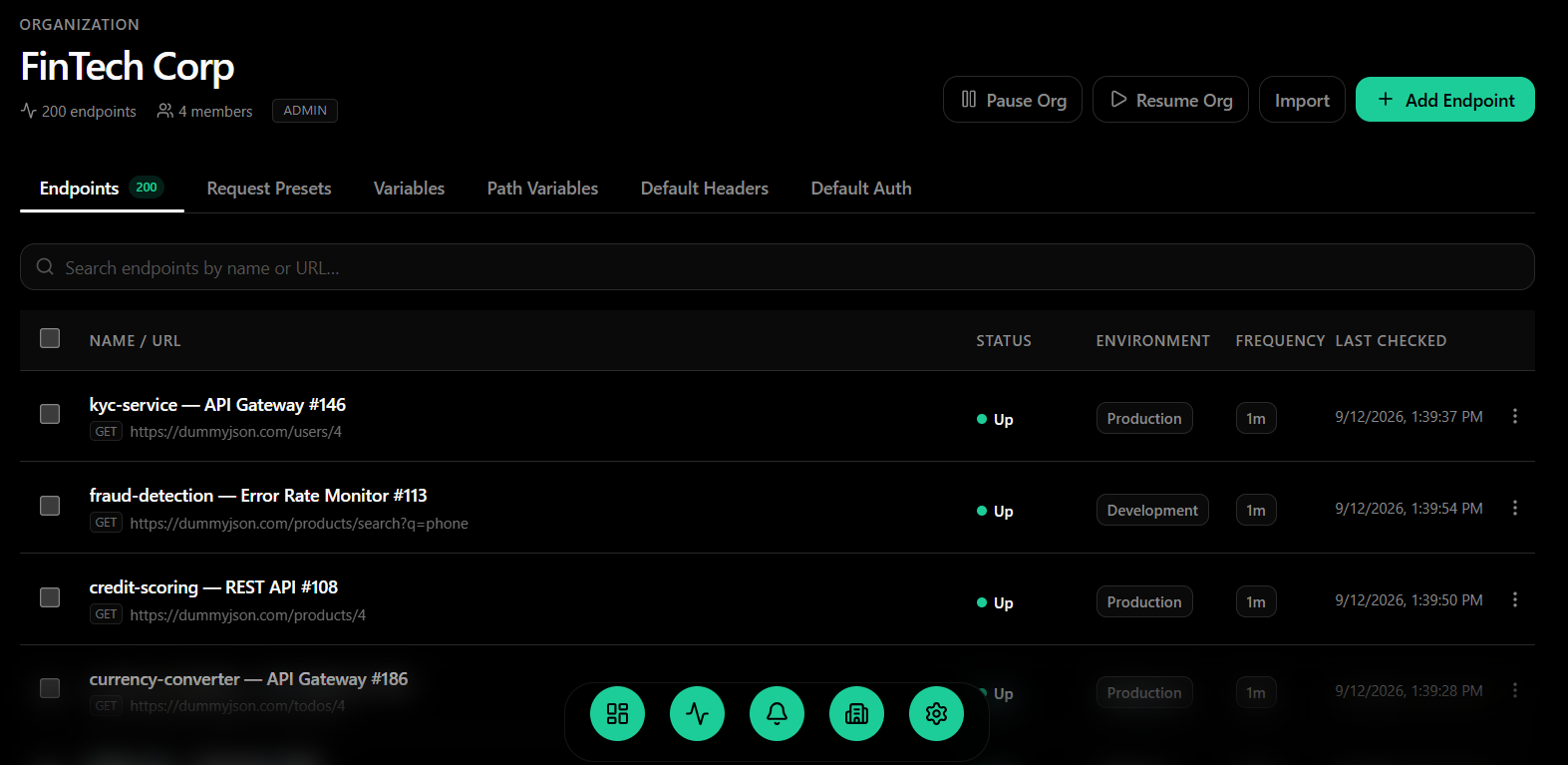
Request presets, variables, path variables, default headers, and default auth live at the org level. Rotate a token there and all 200 endpoints follow.
ScopeOrg-wide defaults
ControlsPause or resume all
AuthOAuth2, Bearer, API key
app.apiwatch.io/org/fintech-corplive
Organization workspace with shared auth config
app.apiwatch.io/importlive
Import from Postman wizard
Postman import

Bring your collection, keep your variables

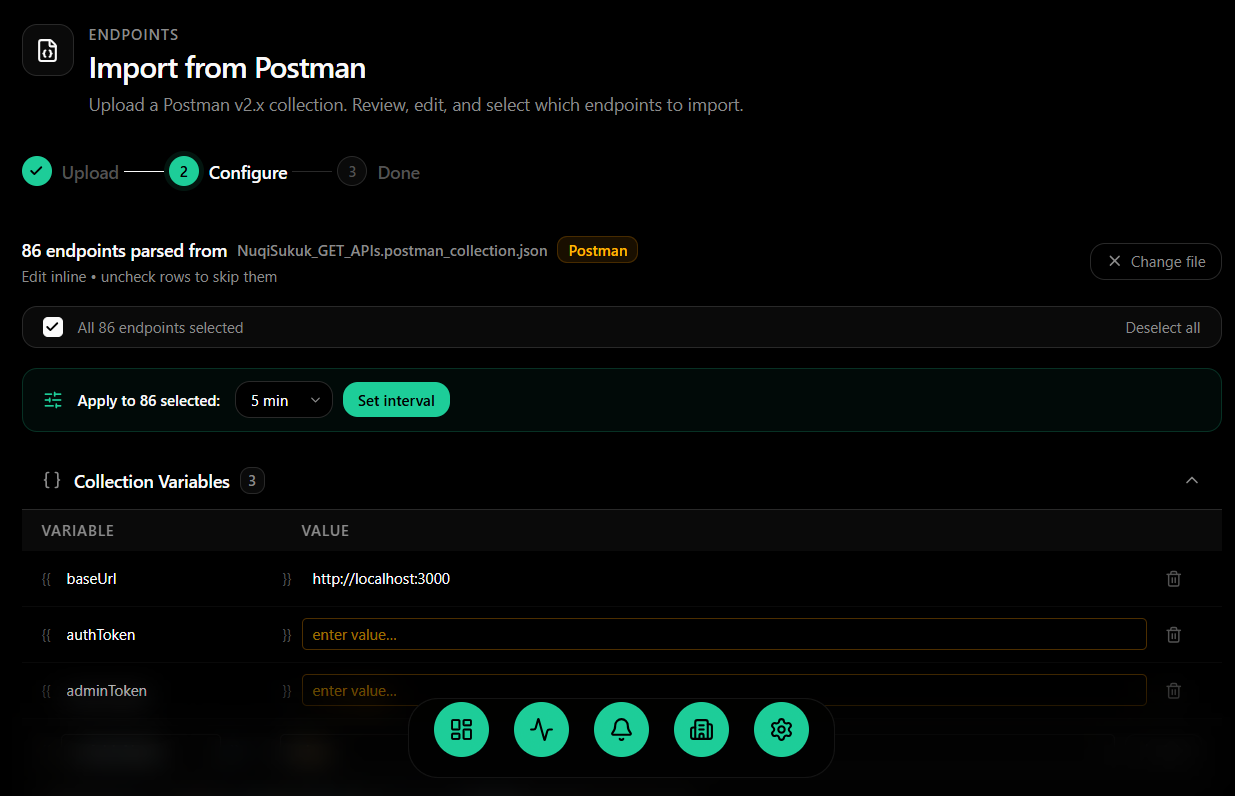
Upload a v2.x collection, review the parsed endpoints inline, apply one interval to all of them, and fill collection variables before the first check runs.

86 endpoints parsedEdit inlineVariables preserved

Built to not fall over when you need it most.

TimescaleDBtime-series storageHypertables partition every check by time, so 90-day queries read one chunk instead of a full scan.
BullMQ5 queue tiersChecks, alerts, load tests, imports, and retries run on separate queues and never block each other.
PM2 cluster2 API + 2 workersA worker crash takes down one process, not your monitoring.

Stop finding out from customers.

Free to start. No credit card. Your first endpoint monitored in 3 minutes.

Start monitoring →or import a Postman collection